

SSI vs SSDI: What’s the Difference and Which One Can You Qualify For?
If you’re struggling with a disability or health condition that makes it hard to work, you’ve
probably heard about SSI and SSDI. Both programs help people who can’t work, but they are
not the same. Many people get confused between them, so let’s break it down in simple
terms.
What Is SSI?
SSI stands for Supplemental Security Income. It’s a program for people who have low income
and limited resources.
You can qualify for SSI if you:
- Have a disability that stops you from working, or
- Are age 65 or older, and
- Have little or no income or savings.
SSI helps with basic needs like food, clothing, and housing. It’s not based on your work
history, which means even if you’ve never worked, you may still qualify.
What Is SSDI?
SSDI stands for Social Security Disability Insurance. It’s for people who have worked and paid
Social Security taxes through their jobs.
You can qualify for SSDI if you:
- Have a disability that keeps you from working, and
- Have worked long enough to earn work credits.
The amount you receive each month depends on how much you earned during your working
years. People on SSDI can also receive Medicare after two years of benefits.
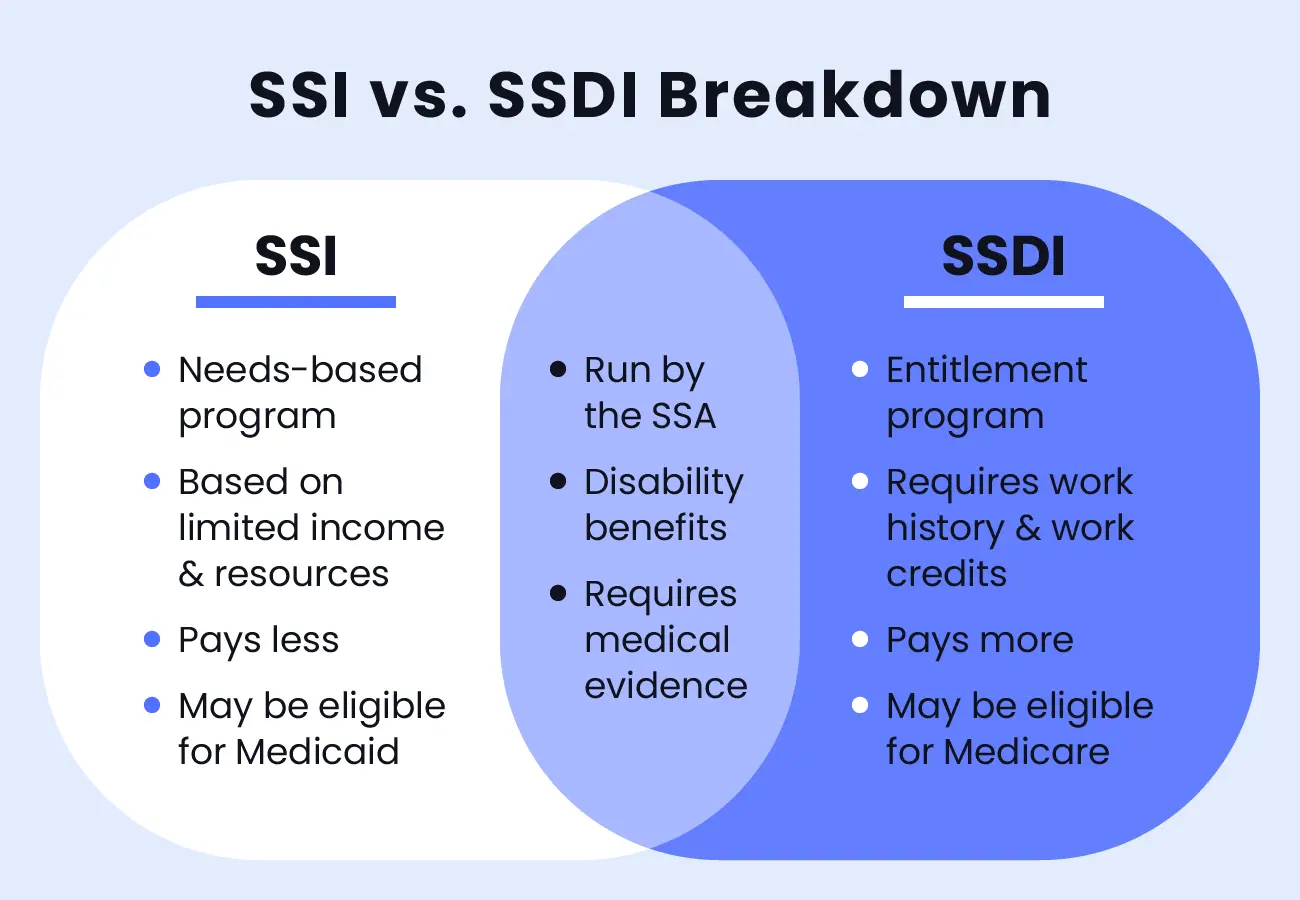
The Main Differences
| Feature | SSI | SSDI |
|---|---|---|
| Based on income | Yes | No |
| Based on work history | No | Yes |
| Health insurance | Medi-Cal | Medicare |
| Age requirement | 65+ or disabled | Disabled, any age |
| Monthly payment | Based on financial need | Based on work earnings |
Can You Get Both SSI and SSDI?
Yes, some people can qualify for both programs. This happens if your SSDI payment is low
enough that you still meet SSI income limits. In that case, you might get SSDI as your main
payment and a smaller SSI payment to fill the gap. This is called concurrent benefits
What If You’re Not Sure Which One You Qualify For?
That’s okay. Many people aren’t sure which one applies to them. The rules can be confusing
and depend on your income, work history, and medical condition.
If you’re not sure, you can get help before applying. Working with an authorized
representative like Mari Nippohusen can make a big difference. She helps people understand
which benefits they qualify for, gather the right documents, file correctly to avoid delays, and
follow up if the claim is denied.
Final Thoughts
Both SSI and SSDI exist to help people who need support. The main difference is how you
qualify: SSI is based on financial need, while SSDI is based on your work history. If you’re not
sure where to start or if your case has been denied, don’t give up. Contact Your Authorized
Representative today for help with your application or appeal. You don’t have to face this
process alone.